

Paint rollers are essential tools for achieving smooth, consistent, and efficient paint application across walls, ceilings, furniture, and decorative surfaces. While brushes remain useful for detail work, rollers dramatically speed up coverage and produce uniform finishes, making them indispensable for both professionals and DIY users. Modern roller varieties now extend beyond traditional foam or fabric sleeves, offering specialty textures, decorative effects, and surface-specific performance. Understanding the different types of paint rollers helps users select the best tool for each project and ensures a better, cleaner result.
Nichiyo manufactures a high-precision pattern rubber roller series used for creating unique decorative textures. You can explore it here: Nichiyo Pattern Rubber Roller. These rollers complement standard paint rollers by offering artistic effects that ordinary rollers cannot produce.
Standard Fabric Rollers for Everyday Wall Painting
Fabric rollers remain the most widely used paint rollers for interior and exterior surfaces. Their core advantage lies in their ability to absorb paint and release it smoothly across large areas. The material nap determines how suitable the roller is for different surfaces. Short naps produce smoother finishes, and long naps reach into deeper textures.
A standard roller sleeve is typically made from synthetic fibers, wool blends, or microfiber fabrics. These materials are designed to carry paint efficiently and reduce drips. For flat walls and ceilings, painters prefer shorter naps between 1/4 to 3/8 inch. For textured drywall, plaster, or masonry, longer naps help avoid uneven surface coverage.
Consistency is a key strength of fabric rollers. When painting large areas such as living rooms, warehouses, or offices, these rollers allow users to maintain uniform color distribution without the streaking that sometimes occurs with brushes.
Foam Rollers for Smooth and Fine Finishes
Foam rollers excel when applying coatings that require an exceptionally smooth surface. They are widely used with varnishes, enamels, and thin paints that level easily. Because the foam surface does not have fibers, it eliminates the risk of lint contamination.
These rollers perform best on surfaces such as cabinets, doors, trim, wooden panels, and furniture. Users appreciate how evenly foam rollers distribute paint, especially when finishing semi-gloss or high-gloss coatings. However, they are less suitable for rough surfaces since the foam cannot reach into cracks or textures.
Foam rollers also pair well with specialty finishes like glaze or metallic paint when a uniform application is desirable. Their controlled absorption helps users apply thin, even layers without excessive buildup.
Microfiber Rollers for High Absorption and Smooth Blending
Microfiber rollers combine high absorption capacity with smooth release, making them suitable for both professional and residential painting tasks. The microfiber strands hold more paint compared to traditional fabric rollers, allowing for longer strokes and fewer reloads.
Users often choose microfiber rollers for matte and eggshell finishes because the fibers minimize stippling. These rollers also perform well when blending large wall sections to avoid visible edge marks. In settings where painters must work quickly while maintaining quality, microfiber rollers offer an optimal balance.
Microfiber rollers work across a range of surfaces, from smooth drywall to lightly textured walls. Their ability to create even layers without saturation lines has increased their popularity in both remodeling and new construction.
Specialty Pattern Rollers for Decorative Effects
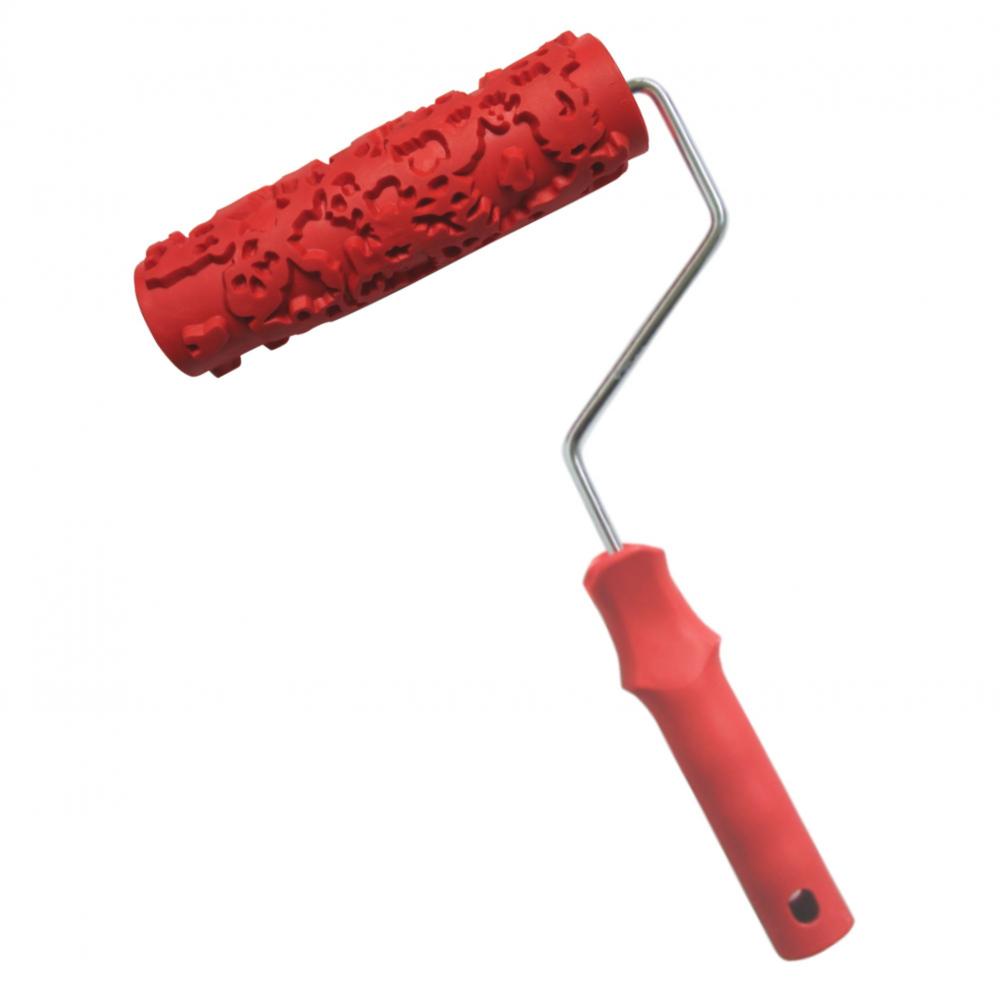
Pattern rollers are designed to imprint textures rather than simply apply a smooth coat of paint. These rollers feature raised patterns on their rubber surfaces and create decorative finishes on plaster, textured coatings, or specialty paints.
Nichiyo produces high-quality pattern rubber rollers engineered to deliver consistent decorative impressions. They are used in interior design projects, accent walls, restorations, and artistic applications. Unlike traditional paint rollers that spread color uniformly, pattern rollers introduce dimension and character.
The technique involves applying a basecoat and then rolling the pattern roller over a still-workable layer or glaze. Because the roller’s design transfers onto the surface, it creates repeated motifs such as waves, floral patterns, geometric lines, or stone-like textures. This makes pattern rollers valuable for users seeking cost-effective decorative solutions.
Mini Rollers for Small or Detailed Areas
Mini rollers are scaled-down versions of standard rollers. Their smaller diameter and narrow width make them ideal for tight corners, window frames, furniture edges, and trim areas that require precision.
These rollers come in foam or fabric styles depending on the surface requirement. Their compact size reduces the need for masking and allows users to manoeuver easily around obstacles. They are also frequently used in furniture refinishing or for applying primers to irregular shapes.
Mini rollers may not speed up large-area painting, but they reduce errors and touch-ups by providing cleaner edge transitions.
Texture Rollers for Thick Coatings and Rough Surfaces
Texture rollers differ from traditional paint rollers because they are designed to apply thick, heavy-bodied materials. Instead of smooth application, these rollers intentionally create pronounced texture.
Common uses include:
- Simulating stone or stucco finishes
- Applying texture to ceilings
- Covering imperfections in old walls
- Enhancing artistic wall finishes
Texture rollers may feature sponge-like surfaces, deep grooves, or raised elements that manipulate the coating to form intentional patterns. They are effective for transforming plain surfaces into visually engaging finishes.
While pattern rollers imprint specific designs, texture rollers introduce irregular or material-driven textures. Nichiyo’s manufacturing expertise in patterned surfaces also aligns with the precision needed to produce high-quality texture rollers.
Specialty Material Rollers for Industrial and Coating Applications
Beyond decorative and residential painting, rollers also play roles in industrial coatings, adhesive spreading, and flooring treatments. Different roller materials offer specialized properties such as chemical resistance, non-absorption, or high durability.
Examples include:
| Roller Type | Typical Material | Common Uses |
|---|---|---|
| Epoxy rollers | Non-stick plastic or fiber | Resin floors, epoxy coatings |
| Glue rollers | Rubber or silicone | Adhesive application |
| Solvent-resistant rollers | Specialty fabrics | Industrial coating systems |
| Metal mesh rollers | Stainless mesh | Removing bubbles in resins |
These rollers highlight the versatility of roller technology across manufacturing and commercial settings.
Choosing the Right Roller Based on Surface Conditions
Selecting the right roller depends on more than paint type; surface condition plays an equally important role. Smooth drywall benefits from short-nap or foam rollers, while textured walls demand longer naps for full coverage. Decorative finishes require patterned or textured rollers instead of standard sleeves.
Professional users often keep multiple roller types available to adapt quickly:
- Short-nap rollers for refined finishes
- Foam rollers for furniture-grade smoothness
- Microfiber rollers for broad efficiency
- Pattern rollers for decorative coatings
- Texture rollers for heavy-bodied materials
Nichiyo’s pattern rollers serve as a specialized addition for projects involving artistic or textured effects where traditional rollers cannot achieve the desired detail.
Maintenance and Care for Paint Rollers
Proper maintenance extends the lifespan of rollers and improves finish quality. Fabric and microfiber rollers should be cleaned immediately after use to prevent paint hardening. Foam rollers, depending on the coating, may be reused or discarded.
Pattern rollers require additional care because dried material can distort the design. Cleaning with mild detergent and warm water is typically sufficient. Nichiyo’s rollers are made from durable rubber compounds that maintain their shape through repeated cleaning cycles.
Storage also affects roller lifespan. Rollers should be dried thoroughly and kept away from direct sunlight to prevent deterioration. Well-maintained rollers ensure consistent results on future projects.
Conclusion
Paint rollers come in a wide range of types, each suited for specific surfaces, coatings, and project goals. Fabric, foam, and microfiber rollers support everyday painting tasks, while mini rollers address detailed work. Texture and pattern rollers enable unique decorative finishes that elevate interior spaces beyond simple color changes.
For artistic and textured designs, high-quality tools like Nichiyo’s pattern rubber roller offer precision, durability, and clean pattern transfer, making them essential for designers and finishers seeking distinctive surface effects.
By choosing the correct roller type and understanding how each one interacts with various coatings and surfaces, users achieve smoother, cleaner, and more efficient painting results across both functional and decorative projects.